
Mall Kiddie Ride Installation Guide: Safe Setup, Compliance & Best Practices
- Introduction — Why a Professional Mall Kiddie Ride Installation Matters
- Ensuring safe, profitable kiddie ride installations for malls
- Step 1 — Pre-Installation Planning and Site Assessment
- Site survey and commercial feasibility for kiddie ride placement
- Step 2 — Space, Dimensions and Clearance Requirements
- Measuring footprint, safety zones, and clearance for kiddie ride installation
- Step 3 — Power, Electrical Safety and Grounding
- Electrical requirements and commercial-grade wiring for mall kiddie rides
- Step 4 — Flooring, Load Capacity and Anchoring
- Anchoring methods and flooring solutions for safe kiddie ride setup
- Step 5 — Assembly, Mechanical Checks and Manufacturer Requirements
- Follow manufacturer assembly instructions and commercial installation checklists
- Step 6 — Safety Inspection and Compliance Verification
- Conduct pre-operation safety tests and ensure regulatory compliance
- Step 7 — Testing, Staff Training and Handover
- Operational testing and staff training for turnkey kiddie ride installations
- Step 8 — Maintenance Plans, Spare Parts and Service Contracts
- Setting up preventative maintenance and commercial service agreements
- Comparison Table — Common Mall Kiddie Ride Types and Installation Considerations
- Quick comparison to choose the right ride for your mall
- Common Installation Challenges and How to Avoid Them
- Addressing power, anchoring and space conflicts in commercial settings
- Legal, Insurance and Liability Considerations
- Documentation, certificates and insurance for mall kiddie ride operations
- Why Choose Guangzhou Huaqin Playground Equipment for Mall Kiddie Ride Installations
- Partner with an experienced manufacturer for turnkey installation and after-sales
- Conclusion — Checklist for a Successful Mall Kiddie Ride Installation
- Final checklist to ensure safe, compliant and profitable kiddie ride deployment
- Frequently Asked Questions
Introduction — Why a Professional Mall Kiddie Ride Installation Matters
Ensuring safe, profitable kiddie ride installations for malls
Installing mall kiddie rides correctly protects children, reduces liability for mall owners, and maximizes uptime and revenue from each unit. This Mall Kiddie Ride Installation Guide explains the full installation lifecycle — from site assessment and electrical requirements to anchoring, safety checks, and handover. Whether you’re buying coin-operated rides or leasing a fleet, following a standardized installation process improves safety compliance, customer trust, and return on investment.
Step 1 — Pre-Installation Planning and Site Assessment
Site survey and commercial feasibility for kiddie ride placement
A thorough site assessment before delivery identifies the best locations for kiddie rides in a mall and avoids delays. Key checks include foot traffic patterns, nearby retail anchors, floor material and load capacity, ingress/egress routes for installation equipment, and proximity to power sources. Ideal placements are high-footfall areas near family-oriented stores, food courts, or entertainment zones.
Step 2 — Space, Dimensions and Clearance Requirements
Measuring footprint, safety zones, and clearance for kiddie ride installation
Measure the proposed floor area and confirm the ride’s footprint plus the required safety clearance. Typical coin-operated kiddie rides range from 1.2 m x 0.8 m to 2.0 m x 1.5 m; small car rides often need roughly 1.5 m x 1.0 m. Allow at least 0.6–1.0 m of unobstructed clearance on all sides for passenger access and emergency egress. For rotating rides (mini carousels), provide the manufacturer’s specified fall zone—usually 1.0–1.5 m beyond the ride boundary.
Step 3 — Power, Electrical Safety and Grounding
Electrical requirements and commercial-grade wiring for mall kiddie rides
Verify voltage and current requirements before installation. Most commercial kiddie rides operate on 110–240V AC and consume between 50–500W depending on features (lights, sound, motors). Ensure a dedicated circuit with proper breakers and a grounded outlet. For areas with strict electrical codes, confirm UL, CE, or local electrical certification for the ride; install an RCD/GFCI where required. Label circuits and keep wiring accessible for routine inspection but protected from tampering.
Step 4 — Flooring, Load Capacity and Anchoring
Anchoring methods and flooring solutions for safe kiddie ride setup
Anchoring prevents tipping and unauthorized movement. On concrete floors, mechanical anchors (expansion bolts) are common. For tiled or raised floors, use chemical anchors or surface-mount plates per manufacturer instructions. If anchoring to temporary mall flooring isn’t allowed, use a weighted base plate or secured portable platform rated to the ride’s static and dynamic loads. Verify floor load capacity; typical kiddie rides weigh 50–300 kg unloaded, with dynamic loads higher when in operation.
Step 5 — Assembly, Mechanical Checks and Manufacturer Requirements
Follow manufacturer assembly instructions and commercial installation checklists
Always assemble rides according to the manufacturer’s manual. Check for tight fasteners, correct motor alignment, and secure electrical connections. Use thread locker on high-vibration points and torque bolts to specified values. Record serial numbers, firmware versions (if applicable), and complete an installation checklist: mechanical assembly, safety guard placement, coin/credit mechanism test, and emergency stop verification. Keep manufacturer contact details for warranty activation.
Step 6 — Safety Inspection and Compliance Verification
Conduct pre-operation safety tests and ensure regulatory compliance
Perform a full safety inspection before public use. Confirm that pinch points are guarded, edges are rounded, and there are no loose parts. Check restraint systems (if present) and signage in plain English and local language indicating age/weight limits and supervision requirements. Verify certifications such as CE for Europe or UL for electrical components as applicable. Maintain inspection logs and ensure the ride meets local fire and building codes.
Step 7 — Testing, Staff Training and Handover
Operational testing and staff training for turnkey kiddie ride installations
Run multiple operational cycles to test motor temperature, noise levels, and control responses. Train mall staff or ride attendants on safe operation, coin or payment collection, emergency stop procedures, and basic troubleshooting. Provide a printed emergency procedure and maintenance schedule. Successful handover should include a signed acceptance form acknowledging that all checks were completed.
Step 8 — Maintenance Plans, Spare Parts and Service Contracts
Setting up preventative maintenance and commercial service agreements
Establish a preventative maintenance schedule: daily visual checks, weekly cleaning and lubrication, monthly electrical inspections, and quarterly safety audits. Keep a stock of common spare parts (fuses, motors, belts, coin acceptors). Consider a service contract with your supplier for priority response and certified technicians. A well-documented maintenance record enhances safety and extends the ride’s service life.
Comparison Table — Common Mall Kiddie Ride Types and Installation Considerations
Quick comparison to choose the right ride for your mall
| Ride Type | Typical Footprint | Power | Installation Time | Best Location | Typical Price Range (USD) |
|---|---|---|---|---|---|
| Coin-Operated Car | 1.2m x 0.9m | 100–300W | 1–3 hours | Near family zones | $800–$3,500 |
| Mini Carousel | 2.0m diameter | 300–1000W | 4–10 hours | Large open atriums | $5,000–$30,000 |
| Interactive VR/9D Unit | 1.8m x 1.5m | 500–2,000W | 4–8 hours | Entertainment zones | $8,000–$50,000+ |
| Track Train | Variable track length | 500–1500W | 1–3 days | Large family areas | $10,000–$70,000 |
Common Installation Challenges and How to Avoid Them
Addressing power, anchoring and space conflicts in commercial settings
Frequent issues include inadequate power provisioning, inability to anchor to mall flooring, and insufficient clearance for maintenance. Avoid these by confirming power specs early, negotiating temporary anchoring solutions with mall management, and reserving adjacent maintenance space. Always coordinate with mall operations for loading-dock access and installation times to minimize disruption to shoppers.
Legal, Insurance and Liability Considerations
Documentation, certificates and insurance for mall kiddie ride operations
Keep installation records, safety inspections, and manufacturer certificates on file. Ensure the mall and ride operator hold adequate public liability insurance, and that the ride is covered under the operator’s commercial insurance. For international operators, verify compliance with local safety directives and keep an updated risk assessment to satisfy auditors and insurers.
Why Choose Guangzhou Huaqin Playground Equipment for Mall Kiddie Ride Installations
Partner with an experienced manufacturer for turnkey installation and after-sales
Guangzhou Huaqin Playground Equipment Co., Ltd, founded in 2003 in Panyu, Guangzhou, specializes in design, production, sales and after-sales of indoor and outdoor amusement machines including 9D VR Cinema, riding robot walkers, happy cars, motorcycle rides, drift cars, bumper cars, carousels, track trains and arcade game machines. With more than 30 design patents and certifications such as CE, and membership in IAAPA, Huaqin provides end-to-end support including installation, training and spare parts. For mall operators seeking reliable kiddie ride installation services and maintenance contracts, partnering with an experienced manufacturer simplifies compliance and long-term serviceability.
Conclusion — Checklist for a Successful Mall Kiddie Ride Installation
Final checklist to ensure safe, compliant and profitable kiddie ride deployment
Before you open a new kiddie ride to the public, confirm the following: site assessment complete; correct footprint and clearance; dedicated and grounded power supply; proper anchoring or weighted base; full mechanical and electrical testing; staff training and emergency procedures; maintenance plan and spare parts inventory; and documentation of safety certificates. Following this Mall Kiddie Ride Installation Guide reduces downtime and liability while improving guest experience and revenue potential.
Frequently Asked Questions
How long does a typical kiddie ride installation take?Installation time varies by ride complexity. Simple coin-operated rides can be installed in 1–3 hours; mini carousels or VR units can take 4–10 hours; larger track-based attractions may take 1–3 days, including anchoring and testing.
What electrical requirements should I expect for mall kiddie rides?Most commercial kiddie rides require 110–240V AC and consume between 50–2,000W depending on features. Always confirm manufacturer specifications and provide a dedicated, grounded circuit with an appropriate breaker and RCD/GFCI if required by local code.
Do kiddie rides need to be anchored to the floor?Yes, anchoring is recommended to prevent tipping and unauthorized movement. Use mechanical anchors for concrete, chemical anchors for delicate tiles, or heavy-duty weighted bases where permanent anchoring isn’t permitted. Follow the manufacturer’s anchoring instructions.
What certifications should I look for when buying a kiddie ride?Look for CE or UL marks for electrical safety and conformity where applicable, ISO quality management certification from manufacturers, and proof of compliance with local safety regulations. Also consider supplier membership in industry bodies like IAAPA as an indicator of credibility.
How often should I schedule maintenance on mall kiddie rides?Perform daily visual checks, weekly cleaning and lubrication, monthly electrical and safety inspections, and quarterly comprehensive audits. Have spare parts and a service contract to ensure quick repairs and minimize downtime.
Who is responsible for liability if a ride fails after installation?Liability depends on contracts and local law. Generally, mall operators and ride owners should maintain adequate insurance; manufacturers may be liable for defects under warranty if improper installation did not occur. Keep thorough documentation of installation and maintenance activities to manage liability risks.
How to Choose the Best 360 Rolling Car Manufacturer
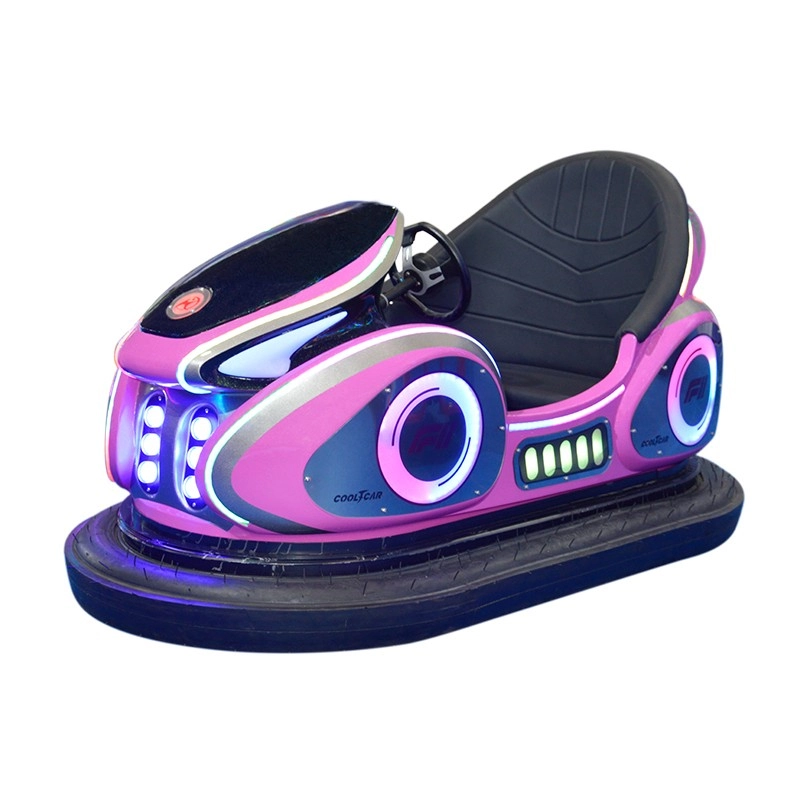
Are battery bumper cars safe for children? Expert guide
Best bumper cars manufacturers and supplier brands in 2026
Common Bumper Car Problems and Quick Fixes
About Battery
How Long is the Battery Charging Time and Working Time?
This amusement machine is operated by lead acid storage battery, battery charging time is 8-10hours.and working time is 4-6hours.
About ROI
Do you support site selection?
Yes, we assist with location evaluation and layout planning.
Can you help with revenue projections?
Absolutely. We offer tailored ROI estimates based on your site and customer profile.
Basic FAQs
How Many Players for This Machine?
Most of machines, it is suitable for 2 players. 2 players means higher ticket price and players get more fun than just 1 player riding.
About Safety
If Possible for Your Machine to Install the Emergency Button?
Yes, if you have this special request, please specify it when placing order. Emergency button function is available for most of machines.
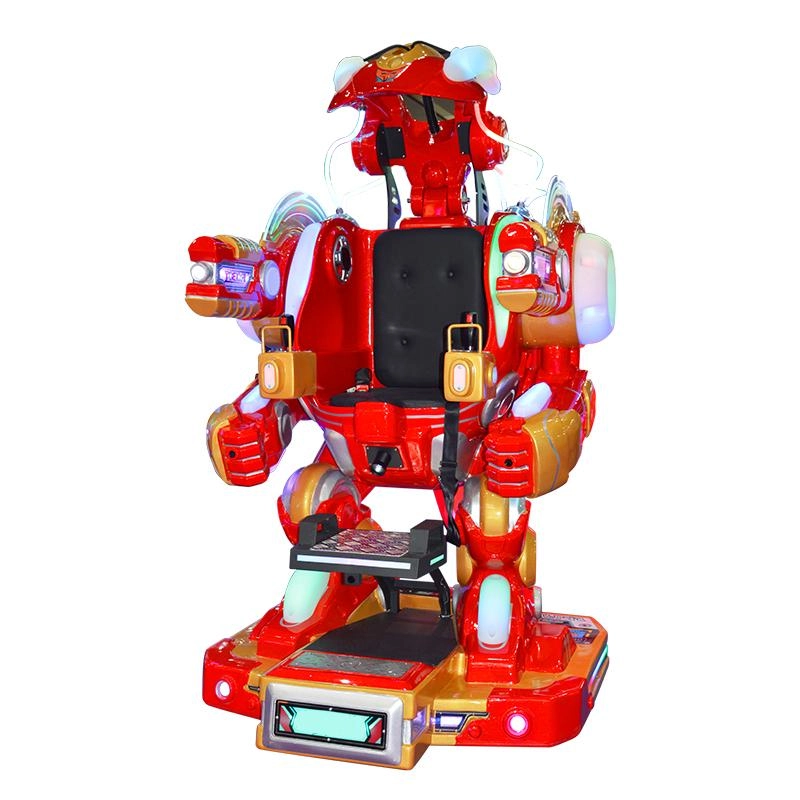
Walking robot II - Hot Amusement Ride Business Sturdy Fiberglass Shell Robot Kiddie Ride for sale
The Walking Robot II is a hot-selling amusement ride designed to draw attention and deliver thrilling fun. Built with a sturdy fiberglass shell and coated with automotive-grade paint, it offers vibrant colors and lasting durability. Featuring comfortable seating, intuitive controls, and a reliable drive system, this kiddie ride is perfect for shopping malls, plazas, and amusement parks seeking to boost foot traffic and enhance customer experiences.
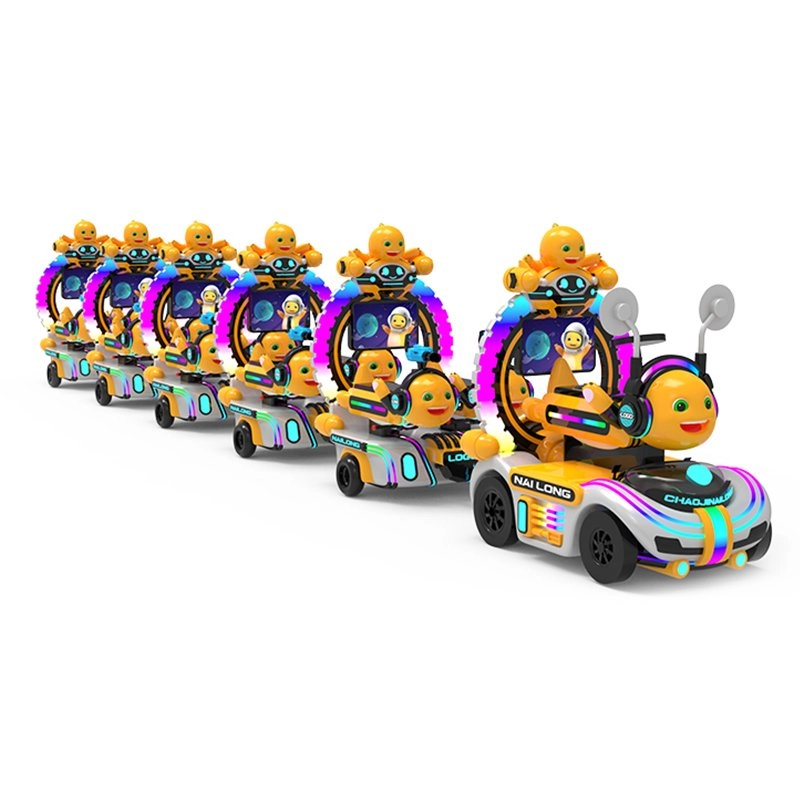
Nai Long Escort Little Train - ODM OEM China Trackless Train Manufacturer Electric Mini Train Choice For Trackless Train Rental Cost Business
The Nai Long Escort Mini Trackless Train combines a vibrant yellow-and-purple color scheme with a playful, high-tech design. Each carriage features 3D Nai Long figures holding two cannons, surrounded by near-complete LED light rings, creating a lively “Nai Long Guard” theme. Built from durable fiberglass, it seats 22 riders and comes with high-definition gaming screens, simulated toy guns, moving seats, LED lights, and oversized realistic tires. Ideal for family entertainment centers, plazas, and amusement parks, buyers can also use it to provide trackless train rentals, expanding their entertainment business and revenue streams.
Shadow Speed Bumper Car - Commercial 360 Battery Bumper Car Factory LED Flow Lights Vintage Bumper Car For Sale
The Shadow Speed Bumper Car is a vintage bumper car with a retro race car body, upgraded for today’s venues. Built by a professional bumper car factory, it offers thrilling 360° spins, LED flow lights, and smooth all-directional joystick control. Powered by a durable battery bumper car system, it supports double players for family fun. As a reliable commercial bumper car, it’s ideal for carnivals, malls, and amusement parks, blending nostalgic design with modern technology to attract crowds and maximize operator revenue.
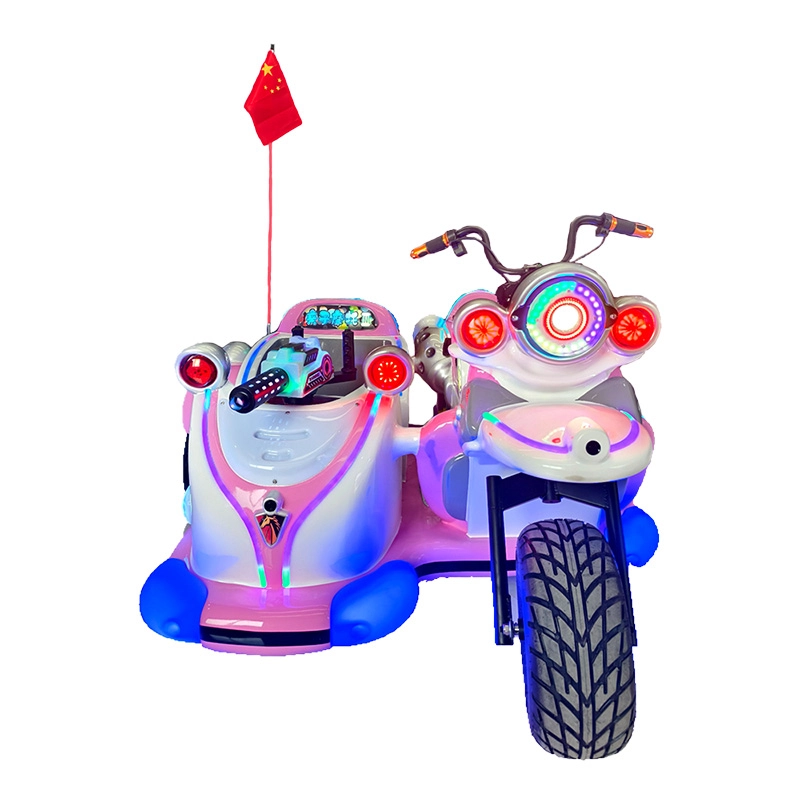
Parent-Kids Motorbike III - Pet-Friendly Flag Holder Amusement Motorcycle Kiddie Ride for Outdoor Plaza Business
The Parent-Kids Motorbike III is a best-selling outdoor kiddie ride designed for family fun. With a stylish motorbike body inspired by police models, it features a rear flag holder, a co-seat for pets, and an interactive toy gun for added play value. Built for durability and comfort, it’s perfect for plazas, malls, and amusement parks to attract families and boost business.
Contact us

ftm@cnhuaqin.com

+86 139 2886 1491

Floor 3-4,8th Plant, No.22 First Street, Daban Industrial Park, Tinggen Village, Shatou Street, Panyu District, Guangzhou City, China.
Whatsapp: +8613928861491
Facebook
Twitter
YouTube